
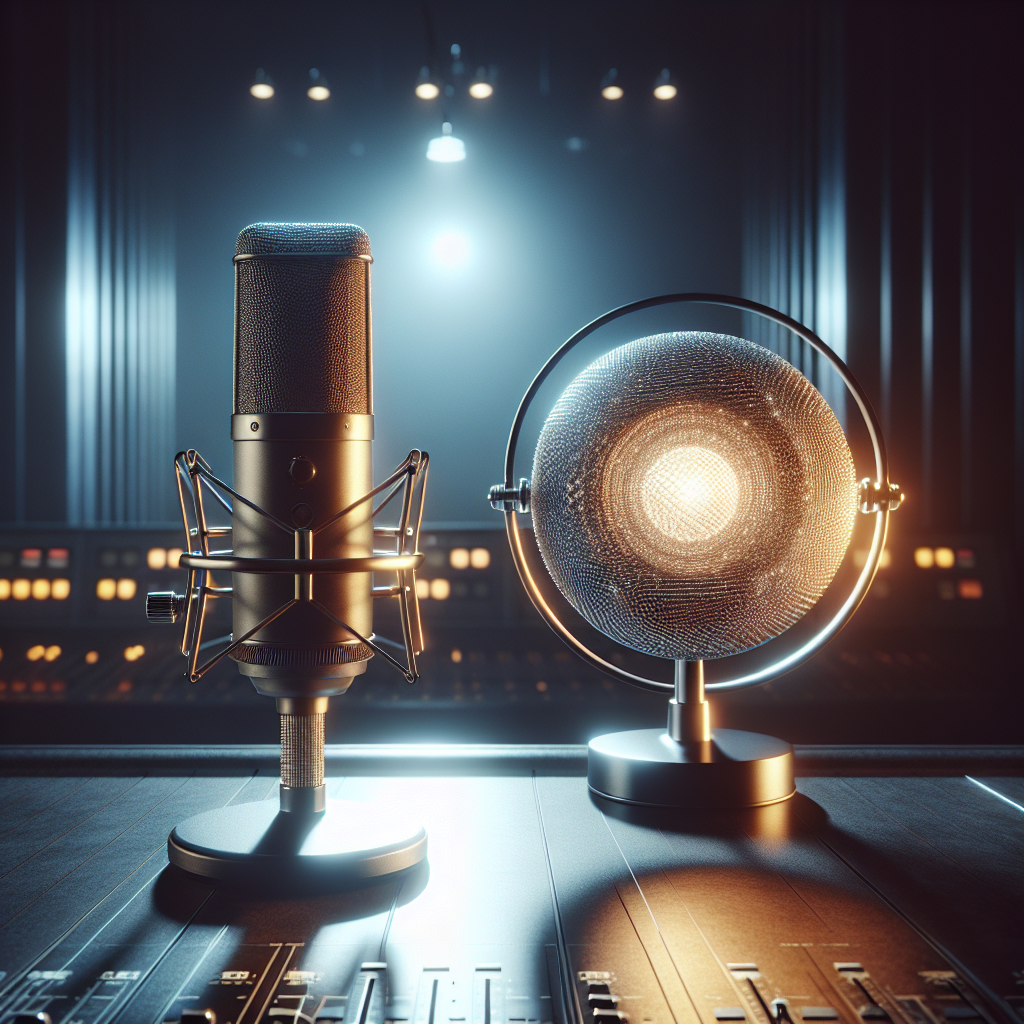
Cardioid vs Omnidirectional Microphones: How to Choose the Right Pickup Pattern
Choosing between cardioid vs omnidirectional microphones shapes how your recordings sound long before you touch an EQ or compressor. The pickup pattern determines what the mic hears and what it rejects. Get that wrong, and no amount of post‑processing fully fixes it.
This breakdown focuses on real recording situations: home studios, podcasts, conference calls, and small video productions. By the end, you should know exactly when to reach for cardioid and when an omnidirectional capsule quietly does a better job.
What cardioid and omnidirectional actually mean
Before comparing cardioid vs omnidirectional, it helps to translate the jargon into something visual.
-
Cardioid: Sensitive in front, reduced on the sides, and heavily attenuated behind. If you drew it on polar graph paper, it would look like a heart shape pointing forward.
-
Omnidirectional: Roughly equal sensitivity from all directions, like a sphere around the capsule.
Both patterns are about directional sensitivity, not tone by themselves. The tone you hear comes from a mix of the capsule design, electronics, and how that pattern interacts with the room and the sound source.
A quick mental picture
-
Imagine a stage vocal mic like a Shure SM58 pointed at a singer. The goal is to pick up the voice and reduce the crowd and speakers. That is a classic cardioid use case.
-
Now imagine a small lavalier mic clipped to a shirt during an interview. The subject turns their head left and right, yet the level stays even. That is usually an omnidirectional capsule doing its job.
Every scenario you face will echo one of those two pictures: focus on one direction, or capture everything around.
How cardioid microphones behave in real rooms
When people compare cardioid vs omnidirectional, cardioid often sounds like the obvious winner: it rejects noise, right? That is only partly true.
Directional focus and background rejection
A cardioid mic hears most clearly from the front, with a useful working angle of roughly 120° in many models. Sounds coming from the rear can be 10–20 dB quieter, depending on frequency.
Example:
You are recording a voiceover at a desk with a computer fan behind the mic and a window with traffic to the side. A cardioid condenser placed 15–20 cm from your mouth, aimed slightly off axis, will capture your voice strongly while pushing the fan and traffic into the background. The fan does not disappear, but it drops enough that a noise gate and light EQ handle the rest.
Proximity effect and tone changes
Most cardioid mics exhibit proximity effect: as you move closer, low frequencies increase. That creates the familiar “radio voice” when someone speaks extremely close to the mic.
This can be helpful or destructive:
-
For podcast hosts with thinner voices, working 5–8 cm from a cardioid dynamic mic can add weight and warmth.
-
For a baritone or bass singer, that same distance may overload the low end, making the recording boomy and muddy.
Example:
A streamer using a cardioid dynamic microphone like an Electro‑Voice RE20 places it about 10 cm away, slightly off to the side. The cardioid pattern keeps keyboard clatter and room echo down, while the controlled proximity effect adds fullness without overwhelming bass.
Off‑axis coloration
Cardioid mics rarely sound neutral off axis. When sound hits from the side or rear, the frequency response changes, not just the level.
Example:
You are recording an acoustic guitar and vocal with one cardioid large‑diaphragm condenser in front of the singer. The guitar body sits off to the side of the mic. The vocal sounds clear, but the guitar tone turns slightly boxy because the mic hears it off axis, where the response is less smooth.
This is one reason stereo pairs and additional spot mics exist. Cardioid gives control, but that control comes with tonal trade‑offs for anything not directly in front.
When cardioid is the better choice
Cardioid mics shine when you need directional focus and some noise control:
-
Close‑miked vocals in a non‑treated room
-
Live stage vocals with loud monitors
-
Loud guitar cabinets in a rehearsal space
-
Podcasting with multiple hosts at one table, each with their own mic
In each of these, the priority is clear: emphasize one source and reduce competing sounds.
How omnidirectional microphones behave in real rooms
Omnidirectional mics are often dismissed as “too noisy” or “too open,” but that judgment usually comes from using them incorrectly. In the cardioid vs omnidirectional debate, omni wins more often than expected when placement and distance are correct.
Even pickup and natural tone
An omnidirectional capsule does not favor one direction. That means it usually has:
-
More consistent frequency response around the mic
-
Less off‑axis coloration
-
No proximity effect in the classic sense
Example:
A lavalier microphone clipped to a speaker’s chest during a corporate video shoot is almost always omnidirectional. The person turns their head, looks down at notes, or gestures sideways, yet the voice stays consistent. With a cardioid lav, each head turn would cause audible level and tone swings.
Distance and room sound
Because omnis hear everything, they are more honest about the room. That can be good or bad.
-
In a quiet, treated space, an omni captures a very natural, open sound.
-
In a noisy office with hard walls, an omni reveals every reflection and keyboard click.
Example:
A small choir of eight singers stands in a well‑treated rehearsal room. A matched pair of omnidirectional small‑diaphragm condensers hangs above them. The mics capture a balanced blend of voices and room ambience. A cardioid pair in the same spot might overemphasize the front row and underrepresent the singers at the edges.
Handling noise and movement
While omnis do not reject background noise directionally, they handle handling noise and breath more gracefully, especially in miniature capsules.
-
Lavalier omnis transmit less clothing rustle than cardioid lavs.
-
Handheld omnis for street interviews give more consistent sound when the mic position shifts.
Example:
A reporter on a busy street uses an omnidirectional handheld dynamic mic. Cars pass, people walk by, but the interview remains intelligible. The ambient noise is present, yet the lack of strong proximity effect and smoother off‑axis response make the overall sound natural and less distracting than a poorly aimed cardioid.
When omnidirectional is the better choice
Omni mics excel when consistency and naturalness matter more than isolation:
-
Lavalier mics for interviews and presentations
-
Room mics for drums or ensembles in a good‑sounding room
-
Conference tables where participants lean back and move around
-
Measurement and calibration tasks, where directionality would bias results
Whenever the subject moves or multiple sources need equal representation, an omni often gives a more reliable result.
Cardioid vs omnidirectional for spoken voice
Speech recording is where the cardioid vs omnidirectional decision shows its impact most clearly. The wrong choice can exaggerate mouth noise, room echo, or inconsistent levels.
Solo podcasting and streaming
Most solo podcasters and streamers work in small, untreated rooms with computers, fans, and reflective walls. In that context, cardioid usually wins.
Example setup:
-
Cardioid dynamic microphone on a boom arm
-
Distance: 5–10 cm from the mouth, slightly off axis to reduce plosives
-
Simple acoustic treatment: a few absorbers behind the mic and to the sides
The cardioid pattern reduces room reflections and background noise enough that basic processing (high‑pass filter, light compression, noise gate) produces a clean result. An omnidirectional mic at the same distance would pick up more room tone and keyboard noise.
However, if the room is heavily treated and quiet, an omnidirectional condenser placed 15–20 cm away can sound more natural and less “close‑miked,” especially for long‑form narration where listener fatigue matters.
Interviews and round‑table discussions
Multiple people talking in one space complicate the cardioid vs omnidirectional choice.
Scenario 1: Each person has their own mic
-
Cardioid mics help reduce bleed between speakers.
-
Proper spacing and gain staging allow separate processing on each voice.
For a three‑person podcast at a table, three cardioid dynamics pointed at each speaker, with 30–40 cm spacing, usually outperform a single omni in the middle. Each voice remains clear, while cross‑talk stays manageable.
Scenario 2: One mic in the middle of the table
-
A single cardioid mic in the center forces off‑axis pickup of everyone.
-
Voices on the sides or far end sound dull or distant.
In this case, a small omnidirectional condenser in the center provides more even coverage. The room will be more audible, but at least every participant sounds similar.
Voice for video: lavaliers and boom mics
Video work brings movement into the picture.
-
Lavalier mics are usually omnidirectional for consistent sound as talent turns their head.
-
Boom mics are typically shotgun or supercardioid, but still follow the same directional logic as cardioid.
Example:
A documentary interview uses two mics:
-
An omnidirectional lav clipped to the subject’s shirt.
-
A supercardioid shotgun on a boom above, aimed at the mouth.
The lav captures consistent, close sound, while the directional boom adds focus and reduces room noise. In editing, the engineer can blend or choose between them depending on the environment.
Cardioid vs omnidirectional for music recording
Music sessions highlight the strengths and weaknesses of both patterns, especially when instruments interact with the room.
Close‑miking instruments
For close‑miked sources in less‑than‑ideal rooms, cardioid usually provides more control.
-
Electric guitar cabinets in untreated rooms
-
Snare drums and toms on loud kits
-
Brass instruments in small rehearsal spaces
Example:
A rock band records in a basement. The walls are bare, the ceiling is low, and the drums are loud. Cardioid dynamic mics on snare and toms, plus a cardioid condenser on guitar cab, keep spill and room reflections under control. An omnidirectional mic on snare in this space would invite cymbal wash and room ring into the track.
Room and ensemble miking
When the room sounds good, omnidirectional mics become powerful tools.
Example:
A string quartet records in a small concert hall with balanced acoustics.
-
A spaced pair of omnidirectional small‑diaphragm condensers above the ensemble capture the full group and room.
-
Optional cardioid spots on first violin and cello provide extra definition if needed.
The omni pair preserves the hall’s natural reverb and stereo width. Using cardioids in the same positions might narrow the image and underrepresent side reflections that give the recording depth.
Overheads and ambience
Drum overheads and room mics often spark debate around cardioid vs omnidirectional.
-
Cardioid overheads work better in low ceilings where reflections from above cause comb filtering.
-
Omnidirectional overheads in a taller, treated room produce a more open, realistic cymbal sound.
Example:
A jazz drummer records in a studio with a 3.5‑meter ceiling and broadband absorption. A spaced pair of omnidirectional condensers as overheads captures the full kit and room. A mono cardioid room mic 2–3 meters in front adds punch. The blend gives a natural yet controlled sound.
Practical factors that influence the choice
Beyond pure sound, a few practical constraints shape the cardioid vs omnidirectional decision.
Room quality and background noise
Ask two questions:
-
How loud is the room? HVAC, traffic, neighbors, and fans matter.
-
How reflective is the space? Bare walls and floors create strong early reflections.
-
Noisy, reflective rooms favor cardioid, used close to the source.
-
Quiet, treated rooms give omnis space to shine.
If treatment is limited, sometimes the best upgrade is not a new microphone but simple absorption panels and a rug.
Distance from the source
Distance changes the balance between direct sound and room sound.
-
With cardioid, you can work closer without overwhelming the low end if you manage proximity effect.
-
With omnis, moving closer does not boost bass in the same way, but the room remains present unless you get very close.
A rough guideline for speech:
-
Cardioid dynamic: 5–10 cm for a focused, broadcast sound.
-
Cardioid condenser: 10–20 cm for clarity with manageable room pickup.
-
Omnidirectional lav: 15–25 cm from the mouth, usually mid‑chest.
Movement and consistency
If the source moves, cardioid patterns punish that movement more.
-
Singers who sway or turn away from the mic lose level and high‑frequency detail with cardioid.
-
Instrumentalists who move around a mic stand cause tone shifts.
An omnidirectional mic softens these issues, at the cost of more room and bleed.
Equipment and budget
Many affordable USB and entry‑level XLR mics ship with cardioid capsules only. That is not a problem; cardioid is versatile. However, if your interface and budget allow, a multi‑pattern condenser that switches between cardioid and omni provides flexibility as your recording spaces change.
Example:
A content creator upgrades to a multi‑pattern condenser. For solo voiceovers in a small room, cardioid is used close up. For recording a small acoustic trio in a larger living room, the same mic switches to omni and moves back to capture a more balanced, natural sound.
FAQ: cardioid vs omnidirectional
Is cardioid always better for home studios?
No. Cardioid helps in noisy, reflective rooms, especially for close‑miked vocals. However, if the room is well treated and quiet, an omnidirectional mic at a sensible distance can sound more natural and less boxy.
Why do most lavalier microphones use omnidirectional capsules?
Lavalier mics sit on the chest, not directly in front of the mouth. People turn their heads, look down, or lean back. An omnidirectional capsule keeps the voice level and tone consistent across those movements, which a cardioid lav would struggle to do.
Does an omnidirectional mic pick up more noise than a cardioid mic?
It depends on placement. At the same distance in the same room, an omni hears more of the space. But if an omni is placed closer to the source than a cardioid, the direct‑to‑room ratio can be similar or even better. Noise perception is not just about pattern; distance and environment matter just as much.
When should an omnidirectional mic be avoided?
Omni mics are a poor fit in loud, untreated rooms where you cannot place them close to the source. Examples include open‑plan offices with HVAC noise, small kitchens with hard surfaces, or rehearsal spaces with loud amplifiers and drums.
Can proximity effect be used creatively with cardioid mics?
Yes. Singers and voice talents often work closer to a cardioid mic to add warmth and fullness. Engineers control the effect with high‑pass filters and mic technique. However, overusing proximity effect can make mixes muddy, especially when several tracks carry excessive low‑frequency buildup.
Are omnidirectional mics better for recording groups?
Often, yes—if the room sounds good. A spaced pair of omnis above a choir or string ensemble can deliver a cohesive, realistic image. In a poor room or very loud context, multiple cardioid mics placed closer to individual sections may yield more usable results.
Should a beginner buy a cardioid or omnidirectional mic first?
For most beginners working at home, a cardioid dynamic or condenser is the safer starting point. It offers better control over room noise and works well for spoken word and many instruments. As needs evolve and recording spaces improve, adding an omnidirectional option expands what can be captured effectively.
Key takeaways
When weighing cardioid vs omnidirectional, pattern choice should follow the situation, not habit:
-
Use cardioid when you need focus, some rejection of background noise, and control in less‑than‑ideal rooms.
-
Use omnidirectional when the room sounds good, the source moves, or multiple sources must be captured evenly.
Thinking about the room, distance, and movement before hitting record will do more for your recordings than any single spec sheet. The pickup pattern is simply the tool that lets those decisions show up clearly in the final sound.


Leave a Reply