
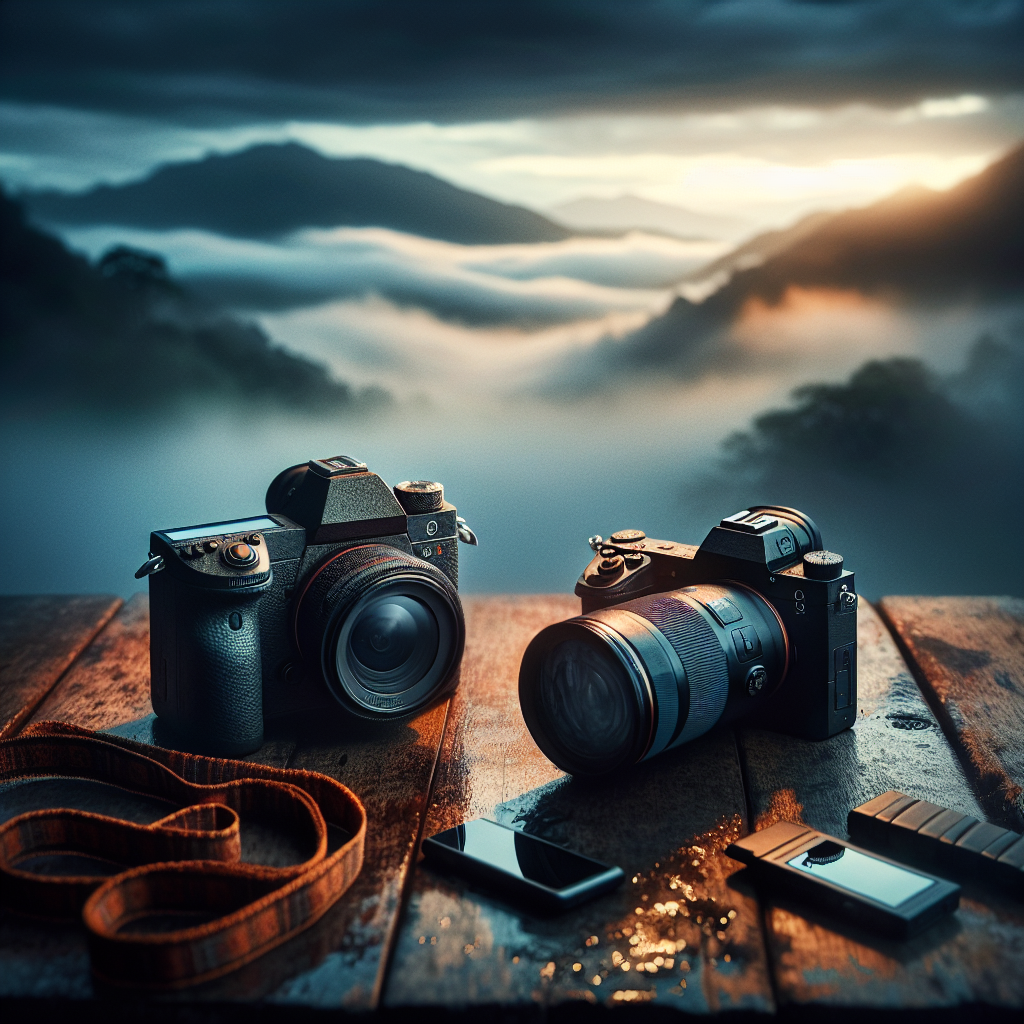
DSLR vs Mirrorless: Which Camera System Fits You Best?
Choosing between dslr vs mirrorless cameras shapes how you shoot, what you carry, and how easily you can grow as a photographer. Sensor size matters, but the real differences show up in autofocus behavior, system weight, lens options, and long‑term support.
This camera comparison focuses on what you actually notice in the field: how fast the camera locks focus on a moving subject, how heavy your bag feels after a full day, how easy it is to find the lens you need, and whether the system will still be supported five or ten years from now.
DSLR vs Mirrorless: Core Differences at a Glance
Both DSLR and mirrorless cameras can deliver outstanding image quality. The gap lies in how they handle light and how you interact with them.
-
DSLR (Digital Single-Lens Reflex): Uses a mirror and optical viewfinder. Light hits a mirror, bounces into a prism, and you see a direct optical view. When you press the shutter, the mirror flips up and exposes the sensor.
-
Mirrorless: No mirror. Light goes directly to the sensor, and you see a live electronic preview on the rear screen or electronic viewfinder (EVF).
A concrete example helps. Take a Canon EOS 90D DSLR and a Canon EOS R7 mirrorless body. Both use APS‑C sensors with similar resolutions. The DSLR offers an optical viewfinder with a traditional feel and strong battery life. The mirrorless body offers faster subject tracking, more focus points, and a smaller, lighter body. Image quality at base ISO is very close, yet the handling experience is different.
When comparing mirrorless vs dslr, the mirror and optical system inside the DSLR add size and weight but deliver a lag‑free optical view. Mirrorless cameras skip that hardware, enabling compact bodies and advanced autofocus features that rely on data from the imaging sensor itself.
Autofocus: Where Mirrorless Pulls Ahead
Autofocus performance is the most significant technical difference in the dslr vs mirrorless debate. It affects everything from portraits to sports and wildlife.
How DSLR Autofocus Works
Most DSLRs use a dedicated phase‑detection autofocus module located below the mirror box. Light is split off to this AF sensor, which calculates focus by comparing phase differences between two points of light.
This design has two practical consequences:
-
Viewfinder vs Live View: When you use the optical viewfinder, the dedicated AF module handles focusing. In Live View (using the rear screen), the camera usually switches to slower contrast‑detect or hybrid AF.
-
Calibration Needs: Because the AF sensor is separate from the imaging sensor, tiny misalignments can cause front‑focus or back‑focus errors. Lenses often require micro‑adjustments for critical sharpness.
Example: A Nikon D750 paired with a 50mm f/1.4 lens can produce beautiful shallow‑depth portraits, but some copies need AF fine‑tuning to keep the eye perfectly sharp at f/1.4. Once calibrated, performance is reliable through the optical viewfinder, but Live View focus may still lag behind.
How Mirrorless Autofocus Works
Mirrorless cameras focus directly on the imaging sensor. Most modern models use on‑sensor phase‑detect pixels combined with contrast‑detect for accuracy.
This approach unlocks several advantages:
-
Focus anywhere in the frame: Instead of limited AF points clustered near the center, mirrorless bodies often offer hundreds or thousands of points covering nearly the entire image area.
-
Eye, face, and subject recognition: On‑sensor data feeds machine‑learning‑based algorithms that track eyes, faces, animals, and vehicles.
-
Consistent AF in stills and video: You get the same autofocus behavior whether you shoot photos or record 4K or 8K video.
Example: A Sony A7 IV tracking a bride walking down the aisle can keep focus locked on her eye, even as she turns her head or other guests move through the frame. The camera uses real‑time eye AF across most of the sensor, something that a traditional DSLR cannot match with its limited AF coverage.
Tracking Fast Action
For sports and wildlife, the mirrorless vs dslr comparison becomes clear.
-
A Canon EOS 7D Mark II DSLR can shoot at 10 fps with strong phase‑detect AF, yet its focus points cover only a central portion of the frame. Tracking a bird in flight often means keeping it near the center.
-
A Canon EOS R7 mirrorless body can shoot up to 30 fps with electronic shutter and deep learning subject detection. The focus points span almost the entire frame, so you can place the bird off‑center and still maintain focus.
Mirrorless cameras also show the exposure and depth of field in the EVF while focusing. When shooting a backlit subject at sunset, you see exactly how the silhouette and highlights look as you adjust settings. A DSLR’s optical viewfinder does not preview exposure in the same way.
When DSLR Autofocus Still Works Well
DSLR autofocus remains strong for:
-
Static subjects in good light, such as landscapes or studio portraits.
-
Optical viewfinder shooters who value zero lag and a natural view.
-
Legacy telephoto lenses where the DSLR AF module has been tuned over years of development.
For example, a Canon EOS‑1D X Mark II paired with a 400mm f/2.8 lens still performs at a very high level for professional sports. However, the industry momentum is now with mirrorless systems that combine high frame rates with subject detection and wider AF coverage.
Weight and Handling: Carrying Your Camera All Day
The next big factor in the dslr vs mirrorless decision is weight. A camera that stays at home never captures anything, so portability matters.
Body Size and Weight
Removing the mirror and prism lets manufacturers shrink mirrorless bodies.
Concrete comparison:
-
Canon EOS 5D Mark IV (DSLR): Approx. 800 g body only.
-
Canon EOS R6 Mark II (Mirrorless): Approx. 670 g body only.
The difference of around 130 g may not sound dramatic, but it becomes noticeable with a strap around your neck for hours. With smaller APS‑C cameras, the gap widens further. A Nikon D5600 DSLR body weighs about 465 g, while a Nikon Z50 mirrorless body weighs around 395 g.
Mirrorless cameras also allow shorter flange distances, enabling more compact wide‑angle designs. That said, full‑frame mirrorless bodies paired with fast zooms can still feel substantial.
Lenses and Overall Kit Weight
Lens design plays a huge role in real‑world weight. Some mirrorless systems deliver compact primes and zooms; others prioritize optical performance over size.
Example kit comparison for a travel photographer:
-
DSLR kit: Nikon D750 + 24‑120mm f/4 + 50mm f/1.8 → roughly 1.7–1.8 kg total.
-
Mirrorless kit: Nikon Z6 II + 24‑70mm f/4 + 40mm f/2 → roughly 1.4–1.5 kg total.
That 300 g difference is like removing a small lens from your bag. Over a full day of walking through a city or hiking, less weight means less fatigue and more willingness to keep shooting.
Handling and Ergonomics
Weight is not the only comfort factor. Grip shape, button layout, and viewfinder type change how the camera feels.
-
DSLR handling: Often deeper grips and more physical buttons, especially on mid‑range and pro bodies. Optical viewfinders remain bright and lag‑free, which many photographers prefer for fast panning.
-
Mirrorless handling: Smaller bodies can feel cramped with large lenses, but manufacturers now offer more substantial grips and custom buttons. EVFs show exposure, white balance, and focus peaking overlays in real time.
Example: A Fujifilm X‑T5 mirrorless camera offers a compact body with dedicated shutter speed, ISO, and exposure compensation dials. A Canon EOS 90D DSLR uses a more traditional mode dial and front‑rear control wheels. Both are effective, yet they encourage different shooting habits.
For long telephoto work, some photographers still prefer the balance of a larger DSLR body with a heavy lens. For street photography or travel, a small mirrorless body with a pancake prime draws less attention and fits into a smaller bag.
Lens Ecosystem: Native Glass, Adapters, and Choice
The camera comparison between dslr vs mirrorless systems becomes more complex once lenses enter the picture. Bodies change quickly; lenses often stay with you for a decade or more.
DSLR Lens Ecosystems
DSLR mounts like Canon EF and Nikon F have existed for decades. As a result, they offer:
-
Extensive lens catalogs: Dozens of primes, zooms, macros, tilt‑shifts, and super‑telephotos from both the camera brands and third‑party manufacturers.
-
Robust used market: Older lenses are easy to find at lower prices, which helps when building a system on a budget.
Example: A Canon EF shooter can choose between multiple 70‑200mm lenses (f/2.8, f/4, IS and non‑IS, from Canon, Sigma, and Tamron) at a wide range of price points. For portrait work, options include the EF 85mm f/1.8, EF 85mm f/1.4L IS, and EF 85mm f/1.2L, plus third‑party equivalents.
If you already own several DSLR lenses, staying with a DSLR body can feel straightforward and cost‑effective in the short term.
Mirrorless Lens Ecosystems
Mirrorless mounts are newer but growing rapidly. Canon RF, Nikon Z, Sony E, L‑Mount, and Fujifilm X now offer strong lineups.
Key characteristics:
-
Optical designs optimized for digital sensors: Shorter flange distances and new optical formulas improve corner sharpness and reduce aberrations.
-
High‑performance zooms and primes: Many mirrorless lenses deliver excellent sharpness wide open, along with fast, quiet autofocus motors suited to video.
-
Native video‑friendly options: Linear focus response, minimal focus breathing, and silent aperture changes appear more often in mirrorless lenses.
Example: The Sony E‑mount ecosystem includes compact primes like the 35mm f/1.8 and 55mm f/1.8, plus high‑end G Master lenses such as the 24‑70mm f/2.8 GM II. A creator can start with a small prime for travel, then add professional zooms later without switching systems.
Canon RF and Nikon Z mounts initially launched with premium glass, but more affordable f/2.8–f/4 zooms and f/1.8 primes are now common. Fujifilm X offers APS‑C‑specific lenses like the XF 18‑55mm f/2.8‑4 and XF 35mm f/1.4 that balance nicely on small bodies.
Using Adapters Between DSLR and Mirrorless
One major benefit of mirrorless systems is the ability to adapt DSLR lenses.
-
Canon EF to RF: Canon’s EF‑to‑RF adapters allow EF lenses to work on RF bodies with full autofocus and metering. Many photographers run an EOS R6 with older EF telephotos without issue.
-
Nikon F to Z: Nikon’s FTZ adapter supports most F‑mount lenses on Z bodies, though older screw‑drive AF lenses may not autofocus.
-
Third‑party adapters: Brands like Sigma, Metabones, and Viltrox provide EF‑to‑Sony E adapters, with varying levels of AF performance.
Example: A photographer with a set of Canon EF L‑series lenses can move to a Canon EOS R5, add an EF‑to‑RF adapter, and continue shooting with existing glass. Over time, that photographer can phase in RF lenses as budget allows.
Adapters introduce an extra connection point and sometimes slow autofocus slightly, yet for many users the flexibility outweighs minor drawbacks.
When deciding between mirrorless vs dslr, consider not only the lenses you want now but also the lenses you might need later. Wildlife, architecture, portraits, and video all reward slightly different choices.
Future‑Proofing: Where the Industry Is Headed
The long‑term trajectory of camera development influences the dslr vs mirrorless decision more than any single specification. Manufacturers are clearly prioritizing mirrorless systems.
Manufacturer Roadmaps
Over the last five years, major brands have shifted their R&D budgets:
-
Canon: New high‑end models like the EOS R3 and EOS R5 are mirrorless. No new professional EF‑mount bodies have launched recently.
-
Nikon: Flagship cameras such as the Nikon Z9 and Z8 are mirrorless, and most new lenses use the Z mount.
-
Sony: Fully committed to mirrorless with the Alpha series. The A‑mount DSLR line is effectively retired.
-
Fujifilm: Focused on X‑mount APS‑C and GFX medium format mirrorless systems.
This does not make DSLRs obsolete overnight. Existing DSLR bodies and lenses remain fully capable. However, future sensor improvements, autofocus algorithms, and lens designs will arrive first—often exclusively—on mirrorless platforms.
Firmware Updates and Features
Mirrorless cameras rely heavily on software. Manufacturers frequently release firmware updates that:
-
Improve subject recognition and tracking.
-
Add support for new codecs or higher video frame rates.
-
Refine EVF performance and menu functionality.
Example: The Nikon Z9 received firmware updates that added new 8K video features and enhanced 3D tracking. That type of iterative improvement is less common on older DSLR bodies, which often see only minor bug fixes.
Resale Value and System Longevity
Resale markets respond to industry direction. As more photographers move to mirrorless, demand for newer DSLR bodies and lenses may soften. High‑quality glass tends to hold value better than mid‑range bodies, but mirrorless systems currently attract more buyers.
If you plan to keep a camera for ten years, a DSLR can still serve well, especially for stills‑focused work. If you expect to upgrade bodies every three to five years, investing in a mirrorless lens ecosystem can align better with where manufacturers are investing.
Buyer’s Recommendations: Matching a System to Your Needs
The dslr vs mirrorless choice should come down to what and how you shoot, not just trend lines. Use the scenarios below as a practical guide.
Choose a DSLR if:
-
Budget is tight and you value optical viewfinders: Older DSLRs like the Nikon D7200 or Canon EOS 80D, paired with used lenses, offer strong image quality at low cost.
-
You own a large DSLR lens collection: If you have several EF or F‑mount lenses and do not need advanced video features, staying with a DSLR body can be efficient.
-
You shoot mainly stills in predictable conditions: Studio portraits, landscapes on a tripod, and controlled lighting benefit less from cutting‑edge autofocus.
Example: A portrait photographer working with strobes in a home studio may find a used Canon EOS 5D Mark III and a pair of EF primes more than sufficient, with little pressure to upgrade.
Choose a Mirrorless Camera if:
-
You shoot fast action, weddings, or events: Eye AF and subject tracking on cameras like the Sony A7 IV, Canon EOS R6 Mark II, or Nikon Z6 II reduce missed shots.
-
You travel frequently or hike with your kit: Lighter bodies and compact lenses make a difference when you carry gear for hours.
-
You create both photos and video: Mirrorless cameras deliver better continuous AF in video, cleaner HDMI output, and more advanced codecs.
-
You want a system that will grow with new tech: Future lenses and bodies will primarily target mirrorless mounts.
Example: A hybrid creator producing YouTube videos and client portraits can build a Sony E‑mount kit with an A7 IV, a 24‑70mm f/2.8, and a 35mm f/1.8. That setup covers talking‑head video, environmental portraits, and low‑light scenes with reliable eye tracking.
Practical Next Steps
-
Define your primary use case: Travel, portraits, sports, wildlife, or video.
-
Set a total budget: Include body, at least one high‑quality lens, extra batteries, and memory cards.
-
Handle both types in person: Visit a store and test how each camera feels in your hand and at your eye.
-
Check lens availability: List the lenses you expect to own in three years. See which system offers them at the quality and price you need.
-
Consider used gear: A used DSLR kit may deliver better optics at the same price as an entry‑level new mirrorless body.
Balancing these steps will lead to a choice that fits how you actually shoot, not just what the spec sheets emphasize.
FAQ: DSLR vs Mirrorless
Is image quality better on mirrorless than DSLR?
Image quality depends more on sensor size, sensor generation, and lens quality than on the presence of a mirror. A recent full‑frame mirrorless camera usually outperforms an older APS‑C DSLR in dynamic range and high‑ISO performance. However, a modern APS‑C DSLR can still match or beat an early‑generation mirrorless body. When comparing similar‑generation full‑frame sensors, differences are often small.
Which is better for beginners: dslr vs mirrorless?
For beginners, mirrorless cameras usually offer an easier learning curve. The EVF and rear screen show exposure, white balance, and depth of field in real time, which speeds up understanding of manual settings. Many entry‑level mirrorless bodies also provide effective auto modes and focus tracking that reduce missed shots. A budget DSLR kit can still be a strong option if cost is the main constraint and a used bundle is available.
Are DSLRs being discontinued?
Manufacturers have slowed or stopped development of new DSLR bodies and lenses, focusing instead on mirrorless systems. That does not mean existing DSLRs suddenly stop working or lose support. Service centers will continue to maintain them for years, and the used market remains active. However, new technology and high‑end innovations are now concentrated in mirrorless lines.
Do mirrorless cameras have worse battery life?
Mirrorless cameras typically consume more power because the EVF and rear screen must stay active. A mid‑range DSLR might capture 800–1000 shots on a single charge, while a similar mirrorless body may average 350–600 shots. Carrying one or two spare batteries usually solves this issue. Many modern mirrorless cameras also support USB‑C charging or power delivery, which helps during long sessions.
Can you use DSLR lenses on mirrorless cameras?
Yes, many DSLR lenses work well on mirrorless bodies with the appropriate adapter. Canon EF lenses adapt effectively to RF bodies, and Nikon F lenses adapt to Z bodies using the FTZ adapter. Autofocus performance is often very good, especially with recent lenses, though some older or third‑party models may focus more slowly. Adapters provide a bridge for photographers transitioning from DSLR to mirrorless systems.
Which is better for video: mirrorless vs dslr?
Mirrorless cameras generally offer better video features. They provide more reliable continuous autofocus, higher resolution options such as 4K60 or 4K120, better codecs, and advanced tools like focus peaking and zebra patterns. DSLRs can still record solid video, especially with manual focus, but mirrorless cameras are now the preferred choice for most creators who shoot both stills and video.


Leave a Reply